
Halal Chicken Versus Conventional Chicken Explained
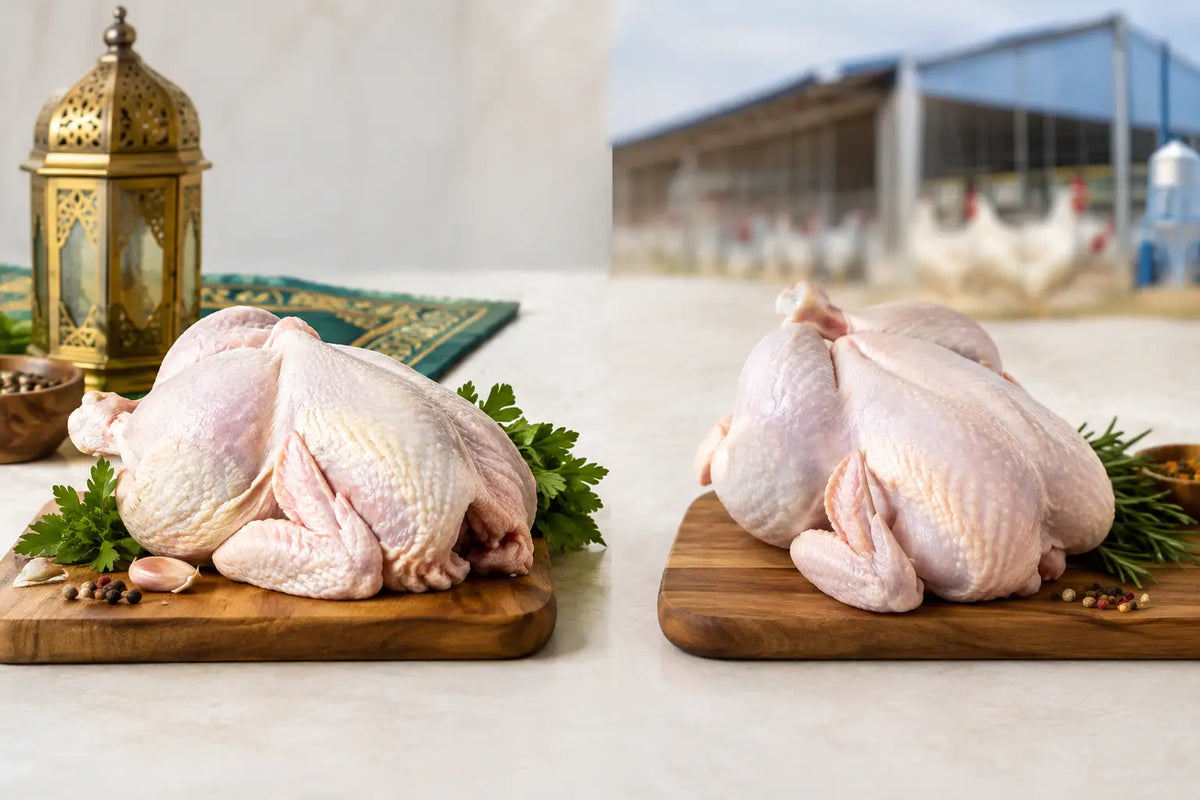
A package of chicken can look simple at the store: breasts for a quick weeknight dinner, thighs for the grill, wings for game day. But when you are choosing halal chicken versus conventional chicken, the label can represent very different priorities. For some families, halal is a faith-based requirement. For others, it is part of a broader decision about sourcing, animal handling, freshness, and knowing more about the food on the table.
The honest answer is that neither label alone tells you everything about quality. Halal chicken can be excellent, and conventional chicken can be responsibly raised and expertly processed. The useful question is not which one is automatically better. It is which standards matter to your household, and whether the butcher or producer can clearly stand behind them.
Halal Chicken Versus Conventional Chicken: The Core Difference
Halal means permissible under Islamic dietary law. For chicken to be sold as halal, it must meet specific religious requirements for the animal, the slaughter process, and the handling of the meat. The bird must be alive and healthy at the time of slaughter, and the slaughter is traditionally performed by a qualified Muslim using a prescribed method while invoking the name of God.
Halal standards also call for the blood to be drained from the animal. This is sometimes described as a major difference from conventional chicken, but it deserves context: all commercially slaughtered chicken is bled as part of normal processing. The distinction is the religious method and oversight required for halal certification, not the idea that conventional chicken contains blood while halal chicken does not.
Conventional chicken is a broad market category rather than a single production standard. It generally refers to chicken raised and processed through standard commercial channels, under federal food-safety inspection. It may come from a large national producer, a regional farm, or a local processor. It is not necessarily raised poorly, but the word conventional does not promise halal certification, a particular feed, pasture access, antibiotic policy, or animal-welfare program.
What Halal Certification Actually Tells You
A halal label should mean the product was handled according to the certifier's standards, from slaughter through packaging and distribution. Certification helps Muslim households shop with confidence, especially when buying packaged chicken, prepared foods, ground poultry, or specialty cuts where the processing history is not visible.
Still, halal certification programs are not all identical. Some standards allow certain forms of reversible pre-slaughter stunning, while others do not. Some certifiers have detailed requirements for facility segregation and ongoing audits. Others may focus more narrowly on the slaughter process. If a particular standard matters to your family, ask who certified the chicken and what that certification covers.
That question is not being picky. It is the same kind of good question a careful shopper asks about grass-fed claims, organic labels, pasture-raised marketing, or antibiotic use. A clear answer builds trust. A vague one is a reason to keep looking.
Does Halal Chicken Taste Different?
Sometimes, but not because halal is a seasoning or a breed. The flavor and texture of chicken are shaped most by the bird's diet, breed, age, activity level, chilling method, freshness, and how it is cooked.
A fresh, carefully handled halal chicken from a small farm may taste richer or have firmer texture than a typical supermarket bird. But that difference may be tied to how the chicken was raised and processed, not the halal designation alone. The same is true in reverse: halal certification does not automatically mean the chicken is pasture-raised, organic, air-chilled, or free of added solutions.
Read the full product description rather than relying on one word on the front label. Look for practical details: Is it plain chicken or enhanced with a salt-water solution? Was it frozen promptly? Is the producer transparent about where the birds were raised? Are there added ingredients in marinated, breaded, or ground products?
For a simple roast chicken, whole bird quality becomes especially noticeable. For a saucy curry, grilled skewers, or fried chicken sandwich, cut selection, seasoning, and cooking technique will often have a bigger impact than the label alone. A satisfied belly starts with choosing chicken that suits the meal you actually want to make.
Animal Welfare: Look Beyond Either Label
Many shoppers connect halal chicken with humane treatment, and respect for the animal is central to halal principles. But animal welfare should be evaluated through specific practices, not assumptions. The halal label confirms religious compliance. It does not, by itself, explain living conditions from hatchery to farm.
The same is true for conventional chicken. Federal inspection addresses food safety and wholesomeness, but it is not a complete animal-welfare scorecard. To understand how birds were raised, ask about stocking density, access to outdoors or pasture, housing, transport distance, feed, and the farm's approach to flock health.
Smaller family farms and Amish farm communities may offer a more direct line of sight into these details, particularly when you buy through a butcher who knows the farmers. That does not mean every small operation is identical or every large operation falls short. It means transparency is worth more than a broad marketing claim.
If humane raising is a top priority, seek a seller who can speak plainly about farm relationships and processing practices. You should not have to guess where your dinner came from.
Food Safety and Clean Ingredients
Both halal and conventional chicken sold legally in the United States are subject to USDA inspection. Safe handling still matters at home, regardless of the label. Keep raw chicken cold, prevent it from touching ready-to-eat foods, wash hands and surfaces after handling, and cook it to 165°F in the thickest part.
The ingredient question is separate from the halal question. Plain raw chicken should have a short, straightforward ingredient statement. But injected or marinated poultry can contain water, salt, broth, flavorings, phosphates, or other ingredients. Those additions are not automatically unsafe, but they can affect taste, sodium, texture, and how the chicken cooks.
For cooks who value clean, natural meat, the best habit is simple: buy chicken with a clear label and ask questions when the answer is not on the package. Chicken marketed as halal can contain added ingredients. Conventional chicken can be sold with no added ingredients. The details matter more than the category.
Price, Availability, and the Cuts You Want
Halal chicken may cost more than a standard supermarket package, especially when it is certified, individually handled, sourced from a smaller producer, or shipped in insulated packaging. The higher price can reflect certification costs, specialized processing, tighter supply, better traceability, or farm practices that cost more to maintain.
Conventional chicken is often easier to find and may offer the lowest price per pound, particularly for boneless skinless breasts and family packs. That affordability matters. A good food budget has to work in real life, not just on paper.
Where halal suppliers often shine is selection and service. A knowledgeable butcher can help locate whole birds, leg quarters, wings, boneless thighs, ground chicken, or custom quantities for a gathering. That matters for families cooking traditional meals, hosting holidays, feeding a crowd, or simply tired of settling for whatever happens to be in the grocery case.
At BillyDoe Meats, that personal-butcher approach is part of the point. When you can ask where a product came from, request the cut you need, and buy with confidence in the handling, online meat delivery feels a lot less impersonal.
How to Choose the Right Chicken for Your Table
Start with your non-negotiables. If your household requires halal meat, choose chicken from a trusted halal-certified source and ask about the certifier if needed. If your main concern is animal welfare, learn about farm and processing practices. If you are watching sodium or avoiding unnecessary ingredients, choose plain chicken without added solutions.
Then think about the meal. Bone-in thighs are forgiving on the grill and full of flavor. Whole chickens make sense for roasting, smoking, and feeding a family with leftovers. Breasts are convenient for quick meals, while wings and drumsticks are made for a crowd. The right chicken is not just a label. It is a bird raised and prepared in a way you trust, in a cut that helps you cook a meal people remember.
When the source is clear and the standards match your values, dinner gets easier. That is good for the cook, good for the family, and very good for the next plate at the table.