
Goat Meat vs Beef: Flavor, Nutrition, and Cuts
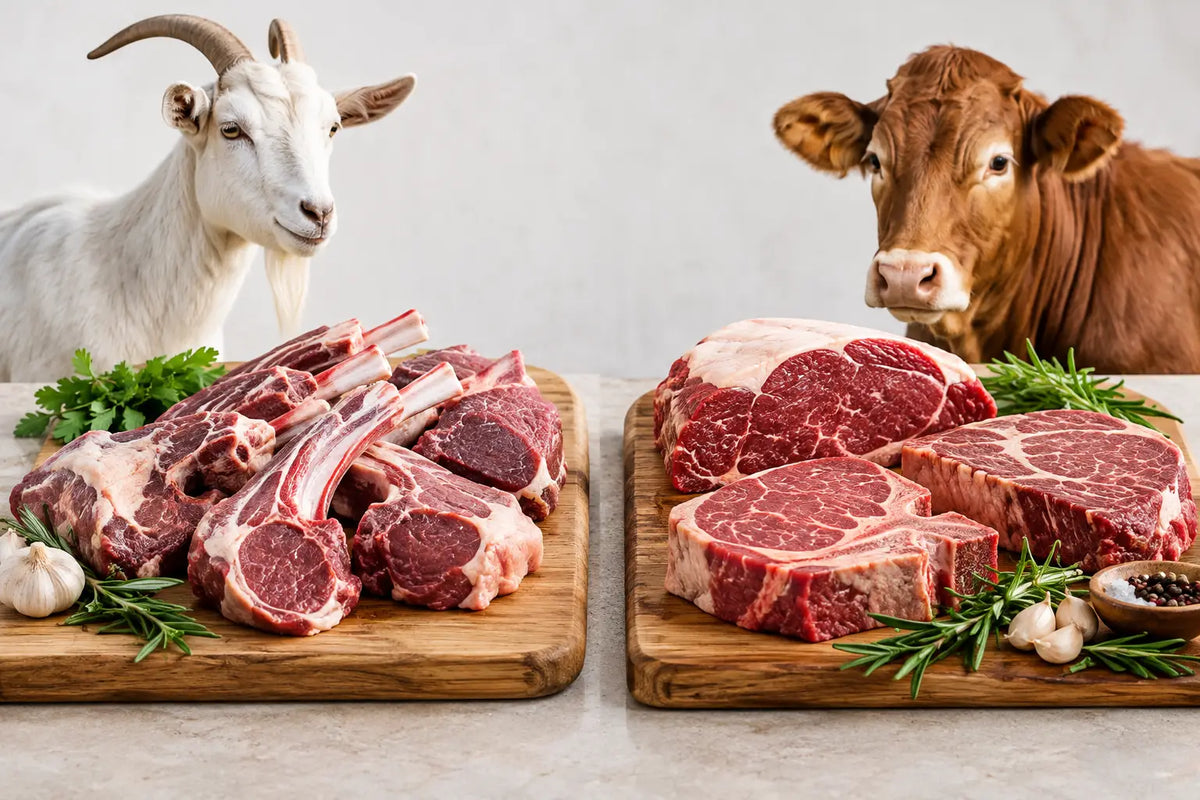
A goat shoulder slowly braising for Sunday dinner and a thick beef ribeye hitting a hot grill may both start at the butcher counter, but they answer very different cravings. In the goat meat vs beef conversation, there is no single winner. The better choice depends on the meal you are making, the flavor you want, your cooking method, and whether you are looking for a lean everyday protein or a richly marbled steak-night favorite.
For families who have grown up eating goat, the choice is often simple: goat belongs in curry, birria, stew, roast, or barbecue. For many American households, beef is the familiar default for burgers, pot roasts, steaks, and chili. Both deserve a place in a well-stocked freezer, especially when they come from farms where careful raising and honest handling matter.
Goat Meat vs Beef: The Biggest Differences
The most noticeable difference is fat. Goat is naturally quite lean, while beef can range from very lean to heavily marbled depending on the cut, breed, and how the animal was raised. That fat changes everything from nutrition to flavor to how forgiving the meat is in the pan.
Beef has a fuller, richer flavor, particularly in cuts with visible marbling such as ribeye, strip steak, brisket, and chuck. Its fat carries that classic beefy taste and helps meat stay juicy over high heat. Goat has a clean, savory flavor that is often described as slightly earthy or pleasantly gamey. Good goat should not taste harsh. When it is properly handled and cooked with care, it is tender, aromatic, and deeply satisfying.
Texture also sets them apart. A tender beef steak can be cooked quickly over high heat and served medium-rare. Many goat cuts come from active muscles and benefit from moisture and time. That does not mean goat is difficult. It simply rewards the right approach: low-and-slow cooking, a covered roast, pressure cooking, or a flavorful marinade followed by gentle grilling.
A note on age and cut
Not all goat tastes or cooks the same. Younger goat, often sold as kid or cabrito, is milder and generally more tender. Mature goat, sometimes called chevon, has a more developed flavor and is especially good in dishes that simmer, braise, or smoke for several hours.
The same principle applies to beef. A filet and a beef shank should not be treated alike. Choosing the right cut matters more than following a one-size-fits-all rule about the animal.
Nutrition: Lean Goat or Richer Beef?
Goat is a strong option for shoppers who want a naturally lean red meat. It generally contains less total fat and less saturated fat than many popular beef cuts, while still providing complete protein, iron, zinc, and vitamin B12. Because it is lean, goat can fit beautifully into meals where you want plenty of flavor without relying on heavy sauces or added fats.
Beef brings valuable nutrition, too. It is an excellent source of protein, iron, zinc, B vitamins, and other nutrients that support an active household. Beef also gives you more choices across the fat spectrum. A lean sirloin or top round makes a different everyday meal than a marbled ribeye or slow-smoked brisket.
For either meat, nutrition depends on the cut, portion size, and preparation. A goat stew loaded with vegetables can be a nourishing family dinner, but adding lots of oil will change the final dish. A grass-fed beef sirloin cooked simply can be lean and satisfying, while a burger topped with cheese and bacon is a different kind of meal entirely. There is room for both. The goal is to choose with your table in mind, not chase a label.
Which Flavor Works Best for Your Recipe?
Beef is familiar, bold, and buttery when well marbled. It pairs naturally with salt, pepper, garlic, onions, smoke, and hearty sauces. If you are cooking burgers, meatloaf, steak fajitas, pot roast, or a classic backyard cookout, beef is usually the straightforward choice.
Goat has a savory flavor that loves spice, acidity, and slow-built aromatics. Garlic, ginger, cumin, coriander, cloves, allspice, chiles, rosemary, thyme, citrus, tomatoes, and onions all work beautifully with goat. Across Caribbean, Mexican, African, Middle Eastern, South Asian, and Mediterranean kitchens, goat is not a specialty ingredient. It is a beloved centerpiece.
If someone at your table says they are unsure about goat, start with a dish that gives the meat time to become tender and soak up seasoning. Birria, curry goat, goat stew, and braised goat shank are excellent introductions. A well-seasoned goat shoulder can turn a skeptical first bite into a clean plate moment. Holy GOAT, indeed.
Choosing Cuts and Cooking Them Well
The fastest way to enjoy beef is to choose a naturally tender cut. Ribeye, strip steak, filet, and flat iron are built for grilling or a hot skillet. Ground beef is the reliable all-purpose choice for tacos, burgers, meatballs, and pasta sauce. Brisket, chuck roast, short ribs, and shank need slower cooking, but they reward patience with rich, tender results.
Goat works best when you match the cut to the method. Goat chops and loin cuts can be grilled or pan-seared, especially when they are from younger animals. Keep the heat controlled and avoid overcooking, since lean meat can dry out quickly. Goat shoulder, leg, neck, shank, ribs, and stew meat are ideal for braising, smoking, roasting, or simmering until fork-tender.
For a goat roast or stew, build a base of onions, garlic, spices, stock, tomatoes, or citrus, then cook covered at a low temperature until the meat gives easily. Do not rush it because the clock says dinner should be ready. Goat becomes tender when connective tissue has enough time to soften. A pressure cooker can shorten the process, while a Dutch oven creates the kind of slow Sunday aroma that brings everyone into the kitchen.
Helpful tips for first-time goat cooks
Season goat generously. Its clean flavor can handle bold spices without being buried. Give tougher cuts enough time and moisture, and use an instant-read thermometer for quick-cooking chops or loin. If grilling lean goat, a marinade with oil, yogurt, citrus, or vinegar can help with flavor and surface browning.
Avoid treating goat stew meat like ground beef or a ribeye. High heat for a short time may leave it chewy. On the other hand, do not assume every beef cut needs a long braise. Knowing the cut is the difference between a tough dinner and a satisfied belly.
Sourcing Matters for Both Meats
Whether you choose goat or beef, ask where it came from and how it was handled. Meat from small family farms and producers who raise animals with care gives you more confidence in what reaches your table. Clean, properly processed meat needs no artificial color, additives, or mystery treatments to earn its place in a family meal.
This matters even more with specialty cuts. Goat is still harder to find than beef in many supermarkets, and the selection can be limited to whatever happens to be in the freezer case. A knowledgeable butcher can help you choose between goat leg, shoulder, chops, ribs, ground goat, organs, or a whole animal for a gathering. For halal households, clear certification and careful service matter just as much as cut selection.
At BillyDoe Meats, that kind of guidance comes from long-standing relationships with American family farms and from treating customers like neighbors, not order numbers. A good butcher should be able to help you plan the meal, not merely hand you a package.
So, Should You Buy Goat or Beef?
Choose goat when you want a lean red meat with a distinctive savory character, or when your recipe calls for a slow-cooked centerpiece with spices, broth, and plenty of soul. It is especially well suited to curries, braises, tacos, stews, celebratory roasts, and dishes meant to feed a crowd.
Choose beef when you want the familiar richness of a steak, a quick weeknight ground-meat meal, or the deep marbled flavor that makes brisket and short ribs unforgettable. Beef is also the easier starting point when time is short and the recipe relies on high-heat cooking.
Better yet, let the recipe lead. Keep beef on hand for the burgers and grill nights, then make room for goat when you want to cook something with history, fragrance, and a little extra patience. The best meal is not the one that wins a comparison - it is the one that gets passed around the table until there is nothing left but the good kind of quiet.